Why synthetic grass may hold pet odours
Unlike natural lawns, synthetic fibres do not biologically absorb and break down urine. Residues may collect on the fibres, within infill or beneath the turf where drainage is poor. Heat and moisture can make an existing smell more noticeable.
We look for the likely source before recommending a treatment. If the underlying base is contributing, cleaning the surface may improve the situation without fully resolving it.
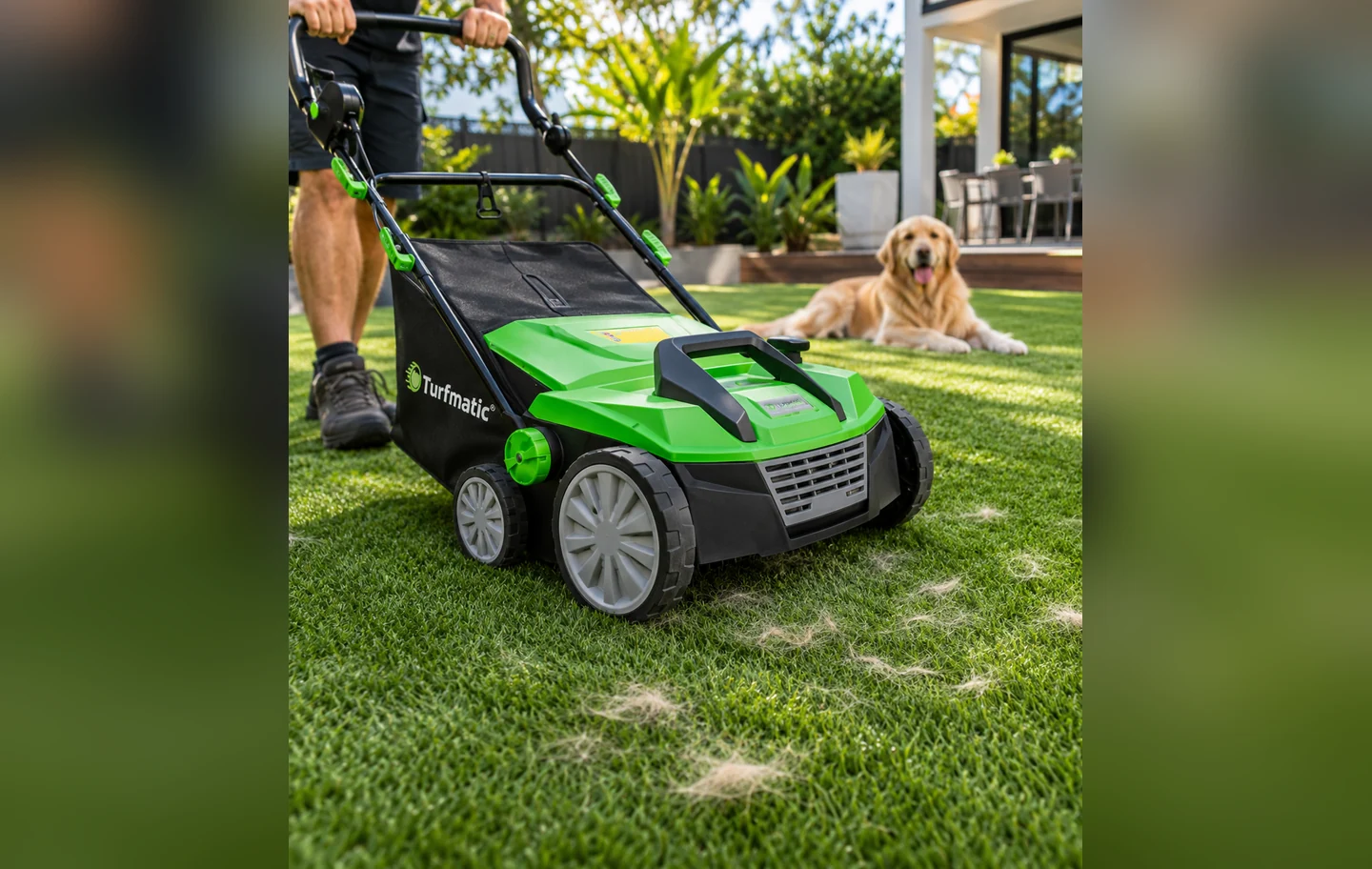
Pet hair and everyday contamination
Hair can become entangled between fibres, particularly in shaded or heavily used corners. Gentle collection and suitable grooming can help lift it without damaging the turf.
- Embedded loose pet hair
- Organic surface residue
- Pet-used play and resting areas
- Smells associated with repeated urine exposure
How we approach pet turf cleaning
We inspect the turf and ask about the animals using it. After loose material is removed, we consider cleaning and odour treatment suited to the turf, infill and surrounding environment.
Treatments are used according to manufacturer directions; pets and people should only return once all applicable re-entry conditions have been met. We do not promise universal odour elimination.
Better ongoing results
Prompt removal of solid waste, appropriate rinsing where permitted, good drainage and regular debris collection can all help. We can provide site-specific care advice after inspecting your grass.