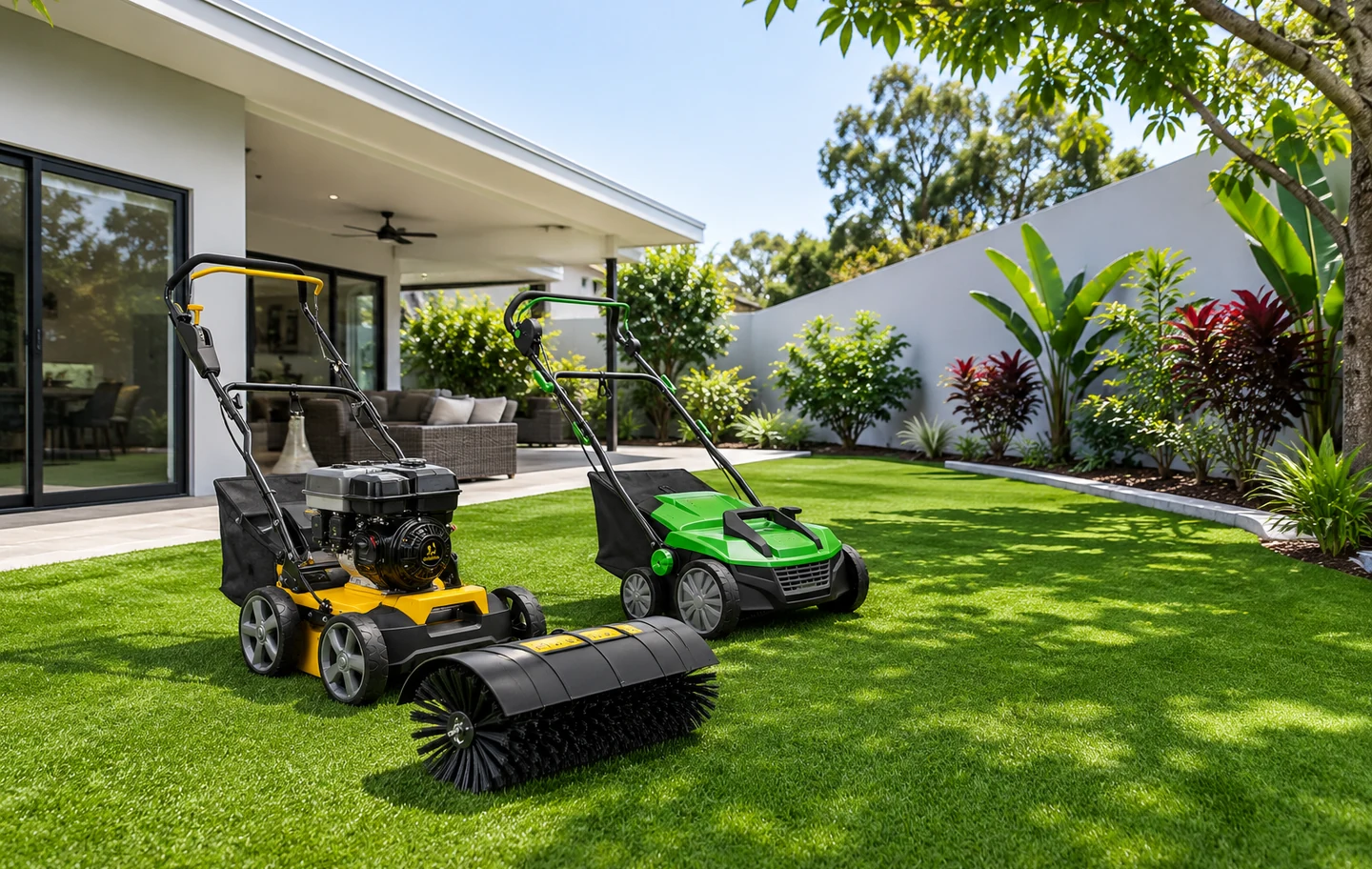
What professional synthetic grass cleaning involves
Cleaning should start with the turf itself: its pile, backing, infill, drainage and the instructions supplied by its manufacturer. A sporting surface may need a different approach from a backyard or childcare playground.
After assessment, the work may involve lifting fibres, removing loose material, targeting surface marks and applying a suitable cleaning treatment. Where pet use or high traffic is involved, targeted odour or hygiene measures can be available.
Common reasons to book a turf clean
A professional clean may help when the lawn looks flat or dusty, develops an unpleasant smell, holds leaves and grit, or has visible marks that routine sweeping has not resolved.
- Flattened or matted fibres in busy walkways
- Dog hair, pet-related odours or organic residue
- Leaves, sand, grit and wind-blown debris
- Spills, surface discolouration or visible algae
- Artificial turf in childcare, school and commercial settings
Our approach to artificial turf maintenance
We inspect before recommending treatment. Mechanical brushing can help lift some fibres, but not every turf product is suitable for the same machine or direction of brushing. Loose debris is removed without unnecessarily disturbing the infill.
Cleaning and chemical treatments are selected for compatibility. If smells or contamination appear to originate beneath the turf, we explain that surface treatment alone may not solve the problem.
Residential and commercial synthetic turf cleaning
For homes, the focus is often presentation, pet-related issues and everyday comfort. For managed sites, we also consider access, operational hours, busy play spaces, documentation and repeat maintenance schedules.
Tell us about your property, area size and main concern. We will explain a sensible scope of work before quoting.