Start with the manufacturer’s advice
Synthetic grass systems vary in their fibre, backing, infill and installation details. Always review the maintenance guidance for your specific product before using brushes, chemicals or pressure-cleaning equipment.
Look first for damaged seams, drainage problems, loose infill or heat-affected fibres. Those issues may need repair rather than cleaning.
Remove dry debris before wetting
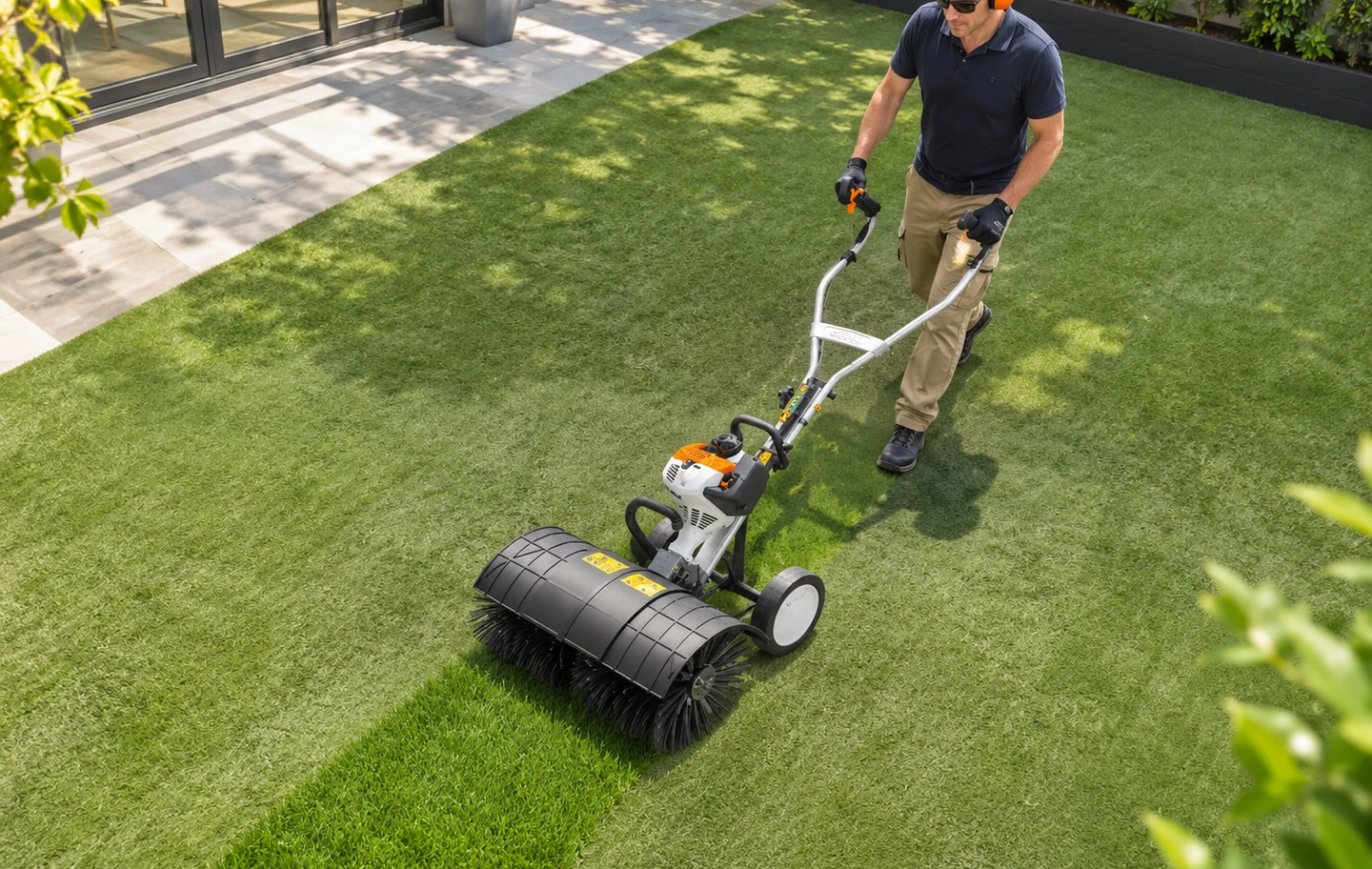
Pick up visible litter and solid pet waste, then carefully remove loose leaves and wind-blown material. Select equipment that will not pull up infill or harm the backing. A stiff metal rake is rarely a suitable default.
Clean only with a compatible method
For general soils, follow the turf maker’s recommended method and approved products. Work in manageable areas. Avoid strong, unapproved chemicals and uncontrolled pressure washing.
For a persistent smell, first determine whether residues may be held in the infill or base. Surface rinsing may not reach the source.
Finish with care
Allow appropriate drying or product re-entry time and gently groom compatible turf to improve appearance. Inspect drainage and recurring damp spots.
If a property has large areas, difficult debris, persistent pet odours or heavy commercial traffic, professional assessment may save repeated trial-and-error.